Showing posts with label training ideas. Show all posts

Saturday, December 26, 2015

Trivializing Training: BY LATIKA KAUL

Imagine this:
Your friend gets a brand new car and invites you for a drive. When you reach his house, you are awestruck at the sight of his brand new car. It’s shiny, black spotless paint is almost blinding and the smell of the interior leather is immensely inviting. You both finally sit in the car and your friend puts his key in the ignition. The roar of a new car. Wow! You relax and stretch yourself on the passenger seat and casually ask your friend.
“You didn’t even tell me, you were learning to drive and now suddenly a new car and license”
“I don’t have a license.”
“You don’t have a license?”
“No bro. Don’t know how to drive only, how will I get a license!!”
“WHAT?? You don’t know how to drive?”
“Nah. But I have played enough GTA, so don’t worry”
What will you do next?
If you will not leave the fate of your life in the hands of an untrained driver, why risk the life of your company?

Even though my experience in the training field is very limited, I often wonder why organizations even conduct trainings in the first place….
• Is it because while recruiting, employees were promised growth and development?
• Or, because they have some funds allotted for L&D, which need to be utilized?
• Or better yet, because of certain mandates?
The answers to all these questions should be a big NO, but sadly it isn’t.
Today, many organizations conduct trainings largely for the above reasons and in doing so they rob themselves and their employees of the many benefits an effective training program can offer. 
Training will develop your employees’ skills. Skilled employees:
- Make lesser mistakes
- Require minimum supervision 
- Are better equipped to handle challenging situations. 
Training can not only become a recruitment tool but also an effective retention tool. The youth today is not satisfied with a big paycheque. They want to develop and grow. As an employer, this trait can actually make your work even simpler. These employees will be more eager to attend training workshops, which will develop them and your organization. 
An effective training program can help build trust of your employees in you. This, in turn, increases their job satisfaction, loyalty and reduces attrition. 
Training can also add flexibility and efficiency. Employees can be cross-trained to become proficient in the different aspects of the organization. This will help keep them interested and will be extremely useful during times of vacant positions or absenteeism. 
Training has become essential for knowledge transfer. In-house training, or trainings conducted by an experienced member of a team will ensure that there are enough people to take charge if the particular experienced person leaves the company. Mostly, trainings assure that both employees and organizations are not stagnant but always emerging and growing.

These benefits might provoke you to conduct trainings for the right reason. But that is not enough.
Trainings will be of no use until they are executed perfectly. This execution begins from initial planning but does not end at the completion of training. Yes, there is more to training than just arranging for a trainer and holding a two-day training workshop. Training continues even after the workshop is over, but not many organizations help in driving the post workshop training.
Even during training, employees face challenges such as:
- Urgent calls or emails
- Arriving late or leaving early due to work commitments
- Sudden meetings or clients that need to be attended to
- Attending programs which are not relevant for their particular roles

Training needs to be planned keeping the employee’s roles and competencies in mind. They need to be prioritized and arranged well so that the employee can attend the program without any baggage from work. Another important point that needs to be addressed is that of management and staff support. An employee can harness all the benefits of training only when his colleagues and his supervisors support him. These employees can be supported by:
They should be able to focus on the training with undivided attention. This means no work related calls or emails.
The management has to support the employees in practicing what they have learned in their training. This could mean giving them assignments that will help them inculcate their learned skills or behaviours. They need to be given time to effectively apply all that they have learned.
Employees can be assessed on how well they apply their learned skills. This well help in keeping them motivated and can also provide a chance for the organization to assess how cost-effective the training was.

By considering the above points, a training program can be made more successful and valuable to the employees and to the organization. 
So, let us not trivialize a training program by conducting substandard TNA’s and hiring unqualified trainers.
Let us not trivialize a training program by randomly selecting a date for the workshop or by completing it as a compulsion.
 Let us definitely not trivialize a training program by trivializing its importance. 

Conducting an effective training program is a huge responsibility which if shouldered correctly will reap your organization a sizable yield. This responsibility will obviously require a great deal of effort. There is a 100% certainty of headaches and maybe some ulcers and perhaps what organizations avoid the most- “spending money”. But, once again please imagine this situation:

CFO asks the CEO: “What happens if we invest in developing our people and then they leave us?”
CEO: “What happens if we don’t, and they stay?”


Saturday, September 19, 2015

ANALYSING ROOT EMOTIONS - By Shohrat Shankar


Types of Human Expressions
Emotional Intelligence is based on the principle of Emotional Awareness, along with others.
Being aware of one’s own emotions is critical for just about everything. From your Self Esteem to relations with others and your success and progress. In fact your happiness depends on how aware you are of your emotions. On how much you know and truly understand why you feel the way you feel.

In this article I plan to illustrate how Emotional Awareness impacts your Self Regard, Self-Actualization and thus everything else in your life.
Over the years I have conducted numerous workshops on “Relationship Management” where I have a short section on Emotional Awareness and many of my observations are from there.

Positive & Negative Emotions

Positive & Negative Facial ExpressionsI normally start the session with asking people to list some emotions. Before they start I ask for some examples and in 8 cases out of 10 I hear ‘Anger’ or ‘Fear’ being said first.

Most people are not able to list beyond 8 emotions. The most common ones are: Anger, Sadness, Fear, Happiness, Love, Joy, Frustration, irritation and Jealousy.

One thing I notice every time is that we tend to list more negative emotions than positive, sadly often “Love” comes in way down on the list. I often wonder why it is so and on delving further and asking people I found that people tend to register the negative emotions they feel while mostly ignoring the positive feelings in the day. 

Reactions of facesYou might have noticed, when you asked somebody how their day went you will either hear a neutral response “OK” or if somebody had a bad day then they will say it. The percentage of people who say they’ve had a ‘great day’ is relatively smaller, in fact it takes a major positive event for most people to say they had a “Great Day”, on the other hand, it doesn’t take much for people to label the day “Bad”. Is it true that most of our days are either “Bad” or “OK” and very few “Great”? Or is it more likely that we tend not to register the small positive emotions that we feel in a day?

Positive Thought
So 2 important factors to remember are:

• “Am I focusing on enough positive things around me or only the negative emotions?”

• “Do I register the small-small nice things or positives that people do or do I fixate on the few things that they did not do?”

The answer to these questions tells me whether I look for Happiness and positivity in whatever I do. It tells me whether I am a happiness magnet or not.

Root Emotions

The second thought I drive is the need to understand and analyse the real reason or cause for my emotion. Similar to doing a root cause analysis in, it is often important to do the same for our behaviour and emotions. Let me try and illustrate with an example.

Let’s say that in a meeting with my colleagues and boss a task is assigned to me and immediately a colleague of mine asks if I need any help. Citing an example where I had failed in a situation when I had done it on my own.

Now many people here would be happy and graciously accept or decline the offer. However, some people would get upset and feel there was an underlying reason for the colleague to offer support in front of the boss.
Root cause
Some might feel he was doing it to appear like a good team player in front of the boss and others might think he wanted to put me down in front of the others. 
The important thing for me to analyse is “Why” or “What” is making me feel that way? What is the real reason for the reaction?

In order to understand my root or real reason for reacting I need to look at the following A-B-C-C model.

A – Activating event (Colleague offers to help)
B – Belief (He’s trying to put me down, He’s trying to show his competence over mine in front of the boss)
C – Consequence (I react and get upset either in the meeting room or later start to distance myself from the colleague)
C – Challenge 
In order for me to change the Consequence I need to Challenge & Understand my beliefs and the cause for my belief.

Challenge & Understanding
When challenging I need to ask myself, Am I sure he is trying to put me down? Does he do this often? Does he also sometimes just willingly offer his hand in assistance? Have I seen him doing this with others?

The answers to these questions will help one rationalise the beliefs and one might realise that probably he could really want to help.
Then it is important to understand the reason for your beliefs. Is it that you really feel scared of doing this task alone? Do you doubt your own competency in fulfilling this task? Do you feel that the colleague is really more competent than you? 

Often we are unwilling to accept the reality of the answers to the above questions and unless we dig deep to understand and accept the reality we might never be able to understand our real emotions and will never be able to challenge the beliefs that cause us to react.
So understand the real reason for the Belief to know why you feel the way you feel and thus react the way you react.


Saturday, September 5, 2015

TO MA’AM, WITH LOVE - By Latika Kaul


“Friends, Romans, countrymen, lend me your ears;
I come to bury Caesar, not to praise him.
The evil that men do lives after them;
The good is oft interred with their bones;
So let it be with Caesar.”

 Act III, Scene II, Julius Caesar by William Shakespeare

To this day, I get goose bumps when I hear or read these lines. The credit for this goes to a strong, dignified and fierce woman who commanded attention from the moment she entered a class. Mrs. Lakshmi Menon.

 The very first memory that I have of her is of terror as she screamed at our class for making noise during a free period. Fast forward to standard IX, she became our English teacher. And then everything changed. I changed. The fear disappeared, all that was left was immense amazement, respect and gratitude.

She taught us with such passion, fervour and enthusiasm that in every class we were transported to different worlds. She introduced us to Saki, Wodehouse, Frost, O. Henry, Keats, Tennyson, R. K Narayan and many more extraordinary writers and poets. She didn’t just teach us their stories and poems, she breathed life into them. She talked about the author’s lives and what must have led them to write their masterpieces.

And then there was Shakespeare. These were the classes I think everyone enjoyed the most. Julius Caesar was like a roller coaster ride with all its ups and downs. We hated Caesar for his arrogance and yet were left agonized over his brutal death. We initially looked up to Brutus, then despised him for scheming with Cassius and eventually pitied him for his nobility. Marc Antony, however, was a favorite amongst us all.
The defining moment that not only changed the plot in Shakespeare’s play but also in my life was Anthony’s funeral speech. It wouldn’t be wrong to say that Mrs. Menon was as good an orator as Shakespeare wrote Anthony to be.  


She not only taught us their stories but always inspired us to write our own. We were no longer kids who wrote boring essays, she saw us as adults who were capable and allowed to write romances, thrillers, horrors or the simple truths of our lives. Due to her encouragement many students began to write and share their work, including me. She always appreciated us, as well as helped us identify ways we could write better. For me, my first achievement in this field was when I received a 23 on 25 on my essay which was a story. Contrary to this, I got a zero in my letter writing for three term exams for making minor mistakes like adding an apostrophe, ‘s’ in, ‘yours’ or missing a comma somewhere. But thanks, to this I now know how to write a perfect formal letter. Before her classes I was not even remotely interested in reading, but like many other things, this too, changed. The very first book I read (in the actual sense of the word) was, ‘The Ambler Warning’ by Robert Ludlum and after that there was no turning back. 

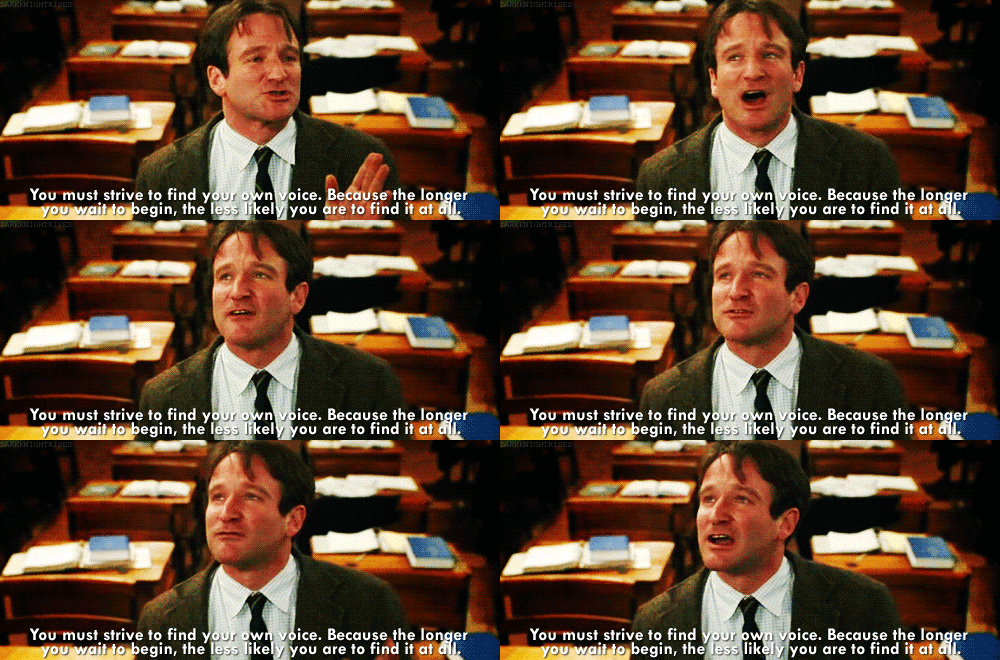
One of my all-time favourite movie genres is of films depicting teacher- student relationships. Films like, Freedom Writers, Remember the Titans, Lean on me, Dead Poets Society and even Sister Act. These are films I can watch over and over again. As I was writing this article, I realized why I love these kind of films. It’s simply because I can relate to it. In all these films, the protagonist who is a teacher or a coach changes the lives of his or her students in ways that were unfathomable before. You might say that this only happens in films but I can assure you, it happens in real life too and I have experienced it first-hand. I have also heard people complain that gone are the days when teaching actually meant something, days when teachers whole-heartedly took interest in their student’s lives or even bothered to take interest in their subject.


While this could be true, let’s not forget that students on their part hardly remember, appreciate or respect their teachers.

The ultimate fact, however is that teachers have always been and will always be an integral part of any student’s life.


So, to all the teachers, I wish you a very happy teacher’s day and I hope that you realize what an immensely honorable responsibility it is to be a teacher. May you continue to mould impressionable minds and light the way for the future generations.


Saturday, August 15, 2015

Happy 69th Independence Day India


E mere vatan ke logo,

jara aankh me bhar lo paani,

jo shahid hue hai unki, jara yaad karo kurbani...

This song was meant for those brave souls who fought for our freedom over sixty decades ago. Soldiers, revolutionaries, freedom fighters to whom we owe our freedom and to whom we shall always be indebted.
On the occasion of our 69th Independence Day, we at Search 4 Excellence want to devote a few words to the incredible men who won us our freedom and to those who are protecting it to this day.

We salute all our heroes: Mahatma Gandhi, Pandit Jawahar Lal Nehru, Shaheed Bhagat Singh, Sukhdev, Rajguru, Bal Gangadhar Tilak and many more who won that Independence for us.

We are also be very grateful to Dr. B.R. Ambedkar, who made the Indian Constitution which describes our rights and duties and most importantly our freedom of expression.

We salute the inspiring and moving speech of our First Prime Minister Pandit Jawahar Lal Nehru.

“Long years ago we made a tryst with destiny, and now the time comes when we shall redeem our pledge, not wholly or in full measure, but very substantially. At the stroke of the midnight hour, when the world sleeps, India will awake to life and freedom. A moment comes, which comes but rarely in history, when we step out from the old to the new, when an age ends, and when the soul of a nation, long suppressed, finds utterance. It is fitting that at this solemn moment, we take the pledge of dedication to the service of India and her people and to the still larger cause of humanity.”

We salute the soldiers who fought the 1947/1948 war with Pakistan


We salute the soldiers who fought the 1962 Sino-Indian war with China


 We salute the soldiers who fought the 1965 war against Pakistan


We salute the soldiers who fought the 1971 war for the liberation of Bangladesh (East Pakistan then)


We salute the soldiers who fought the 1999 Kargil war


We salute the soldiers and men who protected us during the 25/11 Mumbai attacks


We salute the soldiers and men who protected us during the 2010 German Bakery attacks 


“and when all the wars are over, a butterfly will still be beautiful.” ― Ruskin Bond, Scenes from a Writer's Life
And so is India!! Still beautiful, still thriving, still developing and flourishing. And we hope, pray and firmly believe that we will continue down this path in the future so that the following vision of Rabindranath Tagore is fulfilled.

Where the mind is without fear and the head is held high
Where knowledge is free
Where the world has not been broken up into fragments
By narrow domestic walls
Where words come out from the depth of truth
Where tireless striving stretches its arms towards perfection
Where the clear stream of reason has not lost its way
Into the dreary desert sand of dead habit
Where the mind is led forward by thee
Into ever-widening thought and action
Into that heaven of freedom, my Father, let my country awake

Jai Hind Jai Bharat.

Friday, March 27, 2015

What it takes to be “The” Leader?


What it takes to be “The” Leader?

What is it that takes to be “The” leader? The world has pondered over this question since time immemorial. While pondering, we have also scrutinized and analysed the leaders that have existed. We love to criticize them and always hold onto the thought that we would turn out to be better leaders than our present leaders.

Think about it, doesn't everyone want to be a leader at least once? Unfortunately, we work under the impression that we are / will be good leaders. Because, this is fueled by our own “idea” of what a good leader is.


So, how do you find out if your “idea” is synonymous to the world’s idea? Well, we have highlighted 5 major skills or competencies that are the markings of a good leader. 


Shared Leadership
Being a leader is so much more than leading a team to achieve their goals. As a leader, your job is to know your organization’s vision and mission and constantly drive it within the team. To be a leader who is result oriented or profit oriented, you need to be able to connect with your team and counterparts at a personal level. You need to synergize partnerships with your stakeholders and most importantly, your customers. If you can create a bond with your customers then you can drive your team to please the customers as well. Being a leader is perceived as a solitary task and it sometimes is. However, a good leader will always bring people in together and then act rather than dictate what needs to be done. The central idea is be the leader who is a good follower.

Self Discovery
Who likes a leader who doesn't lead by example? It’s an age old wisdom that is often spoken but the meaning has become redundant. A leader is good only if s/he “Walks the Talks”. Live by your principles and preach them. Only then, will you have a team in sync with you. Be aware of your strengths and weakness. A leader is admired and respected if s/he accepts their limitations. Humility is a good trait to have in a leader. Be humble enough to open yourself up to learning new methods, but, always have passion to be the best. The key is to be humble and passionate which the team then perceives as approachable.

Supports People Development
Be a leader for the people. Easier said than done! Good leaders have good teams. Be a coach and mentor to your team. Empower by giving the space to explore and express. Demand excellence and motivate your team to constantly achieve more. However, in the end, be the leader who realizes that his or her team is humane and have issues far larger than work, as that’s the leader who is voted as the “best boss of the year”. 

Strives for Results
All the talk about being people oriented and discovering oneself is moot if you can’t drive results. It’s your task to set goals and find solutions. It’s your
responsibility to make decisions and execute them well. A leader is like the
captain of a ship, s/he needs to set a course, foresee problems and calamities and re – route the path accordingly. Lastly, deliver quality while meeting quantity. History proves that, a team that has delivered qualitative and quantitative results are valued more than teams with quantitative results only.


Strategic Innovation
Lastly, be a leader who lives, breathes and drives change. Don’t be the person who is comfortable with a system, so settles in and gets old living it. Be the change or be the one to help change. To state the cliché, change is the only permanent in life. You, as the leader, need to not only invite innovative ideas but also help your team to come up with ways to implement them.
In the end, be the captain who is approachable, humble, result oriented and drives change. To be an exceptional leader, use these 5 skills in tandem and you will have solutions to all problems you might face. Being a leader is easy, but being ‘The’ leader makes your team and you reach new heights.